After my stint in the Scilly Isles, I hopped a train back to London Town in preparation for the legendary Chelsea Flower Show. I had the opportunity to volunteer with the Eden Project’s garden, which was to become the largest garden in the show’s history. The garden, entitled “Places of Change” was designed, grown, built, and installed with the help of former offender groups and homeless hostels from across England. Many of the individuals helping with the project worked with the Eden Project garden, “The Key,” the year before and the opportunity greatly benefited their lives. It was quite special for me to be a part of such a project, which became so much more than just a pretty garden. After the final judging, the garden won a Silver Flora medal.
While working at Chelsea, I had the unique opportunity of staying in Smith Square near Westminster in the fabulous flat of Mrs. Nancy McLaren. Her late husband was the namesake and benefactor of the scholarship I was awarded, the Martin F. McLaren Scholarship. Staying with Mrs. McLaren was a unique pleasure, and I am forever grateful for her hospitality. Just a few of her generosities included afternoon lapsang souchong tea in her flat, exquisite traditional English dinners at nearby Shephard’s, and two tickets for me and a guest to the fabulous play “War Horse” at the New London Theatre. I will never forget my first trip to London, and I plan on returning as often as possible before leaving the UK.
The Eden Project’s “Places of Change”:


Living and working at Tresco Abbey Garden was a dream come true. There is something so surreal about being on a tiny island just over 1 square mile wide, living in the top of an old abbey with only bicycles for transportation, flashy golden pheasants everywhere, even flashier plants with eye-popping colors and forms that can be described only with the use of a geometry textbook. Needless to say, I had the time of my life.
To fully appreciate Tresco Abbey Garden, one must start with the tale of its pugnacious progenitor, Augustus Smith. Remarkably, the entire Isles of Scilly were leased from the Duchy of Cornwall by the enterprising son of a Hertfordshire gentleman in 1834. Augustus Smith took out a 99 year lease with stipulations to improve the faltering economy of the islands, a task that would become his life’s work, and help create his complex and often controversial persona.
Smith based his ideas on the utilitarian philosophies of Jeremy Bentham, and gained little friends on the islands by the arbitrary way in which he enacted his ideas. Though constantly shrouded in controversy, and even denounced from the pulpit in his hometown of Hertfordshire, Smith managed to improve the plight of the island and enact some very progressive laws for his time. Most famously, Smith introduced compulsory education on the Islands some 40 years before it was adopted on the mainland. For all his efforts, Augustus Smith and his descendents made the Isles what they are today, and in his spare time he created one of the most unique gardens in the world.
Seeking privacy and room to build, Smith moved from St. Mary’s to Tresco because of its central location which gave it protection from the Atlantic by the other islands. On Tresco existed the ruins of the priory of St. Nicholas, a 9th century priory attached to the Benedictine Tavistock Abbey which lasted until the 16th century. Only two arches and a small crumbling wall remained, and would act as a starting point for the Abbey garden. After Smith attempted to build 12ft stone walls, he quickly realized that a more permanent solution was needed to protect the expanding garden from the salty Atlantic gales. He trialed many tree species but found Cupressus macrocarpa and Pinus radiata from the Monterey Peninsula in California to perform the best. With the shelterbelts growing tall, Smith and his gardeners began the process of collecting and planting specimen from every corner of the world in his Abbey garden.
Today, the garden burgeons with a treasure-trove of plants from areas such as Chile, Mexico, California, South Africa, New Zealand, and the Canary Islands. The mild temperatures provided by the Gulf Stream, and the sheltered position within the fortress of Monterey Pines and Cypress provide Tresco Abbey Garden a unique microclimate for producing a lush and stellar garden.
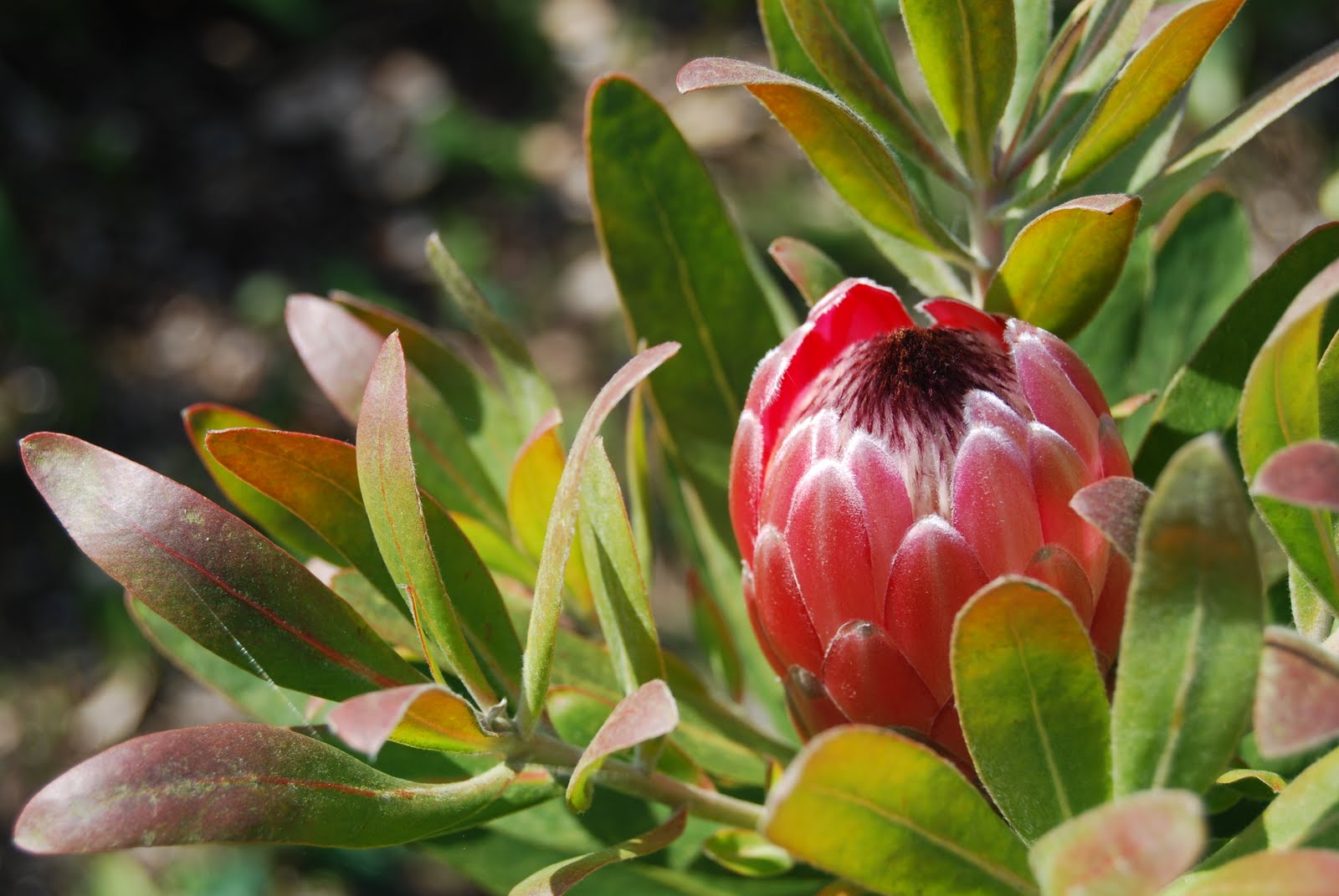
Most of my favorite plants throughout the garden come from the Proteaceae family. Genera such as Protea, Banksia, Leucodendron, Grevillea, and Hakea produce flowers with fluorescent color and stunning architecture. Leucodendron argenteum, the “Silver Tree” from the Cape Peninsula, was used heavily throughout the garden, and displays yellow flowers nestled within the flashy silver leaves.
Tresco Abbey Garden also houses part of the Acacia Collection (85 species) for the NCCPG (National Collection for Conservation of Plants and Gardens). Other noteworthy plants throughout the garden include Metrosideros excelsa (the “New Zealand Christmas Tree”), Puya chilensis, Auracaria (“Monkey Puzzle” and “Norfolk Island Pine”), Jubea chilensis (“Chilean Wine Palm”), Aeonium (“Scilly Cabbage”), Kunzea baxteri, Furcraea longeava, Echium , Cyathea medullaris (a stunning black-stemmed tree fern), Callistemon (“Australian Bottlebrush”), Brugmansia sanguinea, Aloe, and Beschorneria yuccoides (a Mexican Agave with a HUGE red inflorescence). And that’s just the short list! Even the weeds at Tresco can be counted among the visitors favorite plants, including the impressive Geranium maderense and Agapanthus praecox orientalis.
I will sincerely never forget the gardens at Tresco Abbey, as well as all the amazing friends I made along the way. A special thanks to Mike Nelhams (curator) and Andrew Lawson (head gardener) for welcoming into your beautiful garden, and thanks again to Jon Taylor for letting me stay in your fantastic flat at the top of the abbey.


.JPG)